
Fireworks, thunder and other loud noises: what to do to help your dog beforehand, and in the moment
The summer brings challenges to our dogs in the form of sudden noises - thunderstorms and the randomness of fireworks. Noise phobias and reactivity are common in dogs, and can develop later in life.
Helping dogs cope with noises doesn’t need to be hard, and helps keep them safe - there is a 30% increase in lost pets around July 4th!
If your dog doesn’t react now, help keep it that way! If your dog does react read below for how to help.
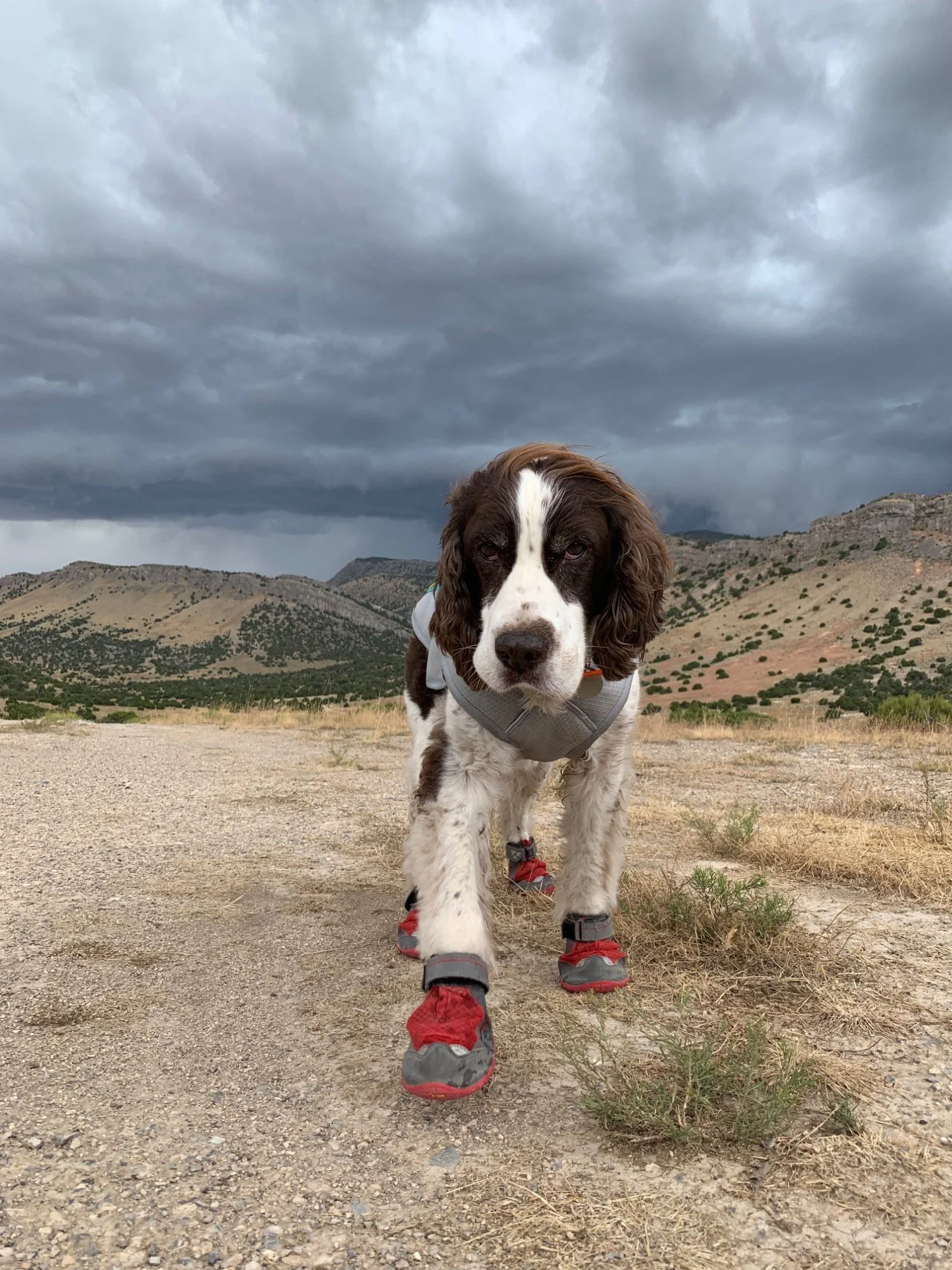
Bodin doing fieldwork with me in Utah just before we took shelter from a big thunderstorm.
Prevent noise reactivity and/or prepare for fireworks and storms
Here are some ways that you can help prevent noise reactivity, or prepare your dog ahead of time:
Check for pain. We know that discomfort in dogs can worsen all types of reactivity, including reactions to noise (1). Having your dog fully checked by your veterinarian to ensure that they are not suffering from pain, GI discomfort, or itchiness will make sure that you can rule that out.
Train calmness. Calmness is so under-valued and so under-trained! I previously wrote a blog post about how to encourage your dog to be calm. Teaching your dog to be calm means they can use this skill in the moment of a storm. Providing them a place where they practice feeling safe and being calm gives them a good place to be when they need it.
Teach positive associations with noises. I teach many clients about Distraction, Mark, Treat (DMT). Simply giving a treat every time your dog hears a loud noise - whether they react or not - teaches them that the noise may result in good things and that they should come to you. Both good things! If your dog really struggles with noises get in touch for more advice about a tailored desensitization and counter conditioning plan.
Consider diet and medications. There is a strong connection between the gut and behavior (2), so providing your dog with a diet and supplements that promote calmness can help. If your dog needs more support, talk to your vet about short-term or longer-term medications.
6 things to do in the moment or on the day
Provide access to a safe space - Somewhere calm, cozy, inviting, and where your dog feels safe (see here for examples). They should not be contained and ideally will have access to you for comfort if they need it. You can provide familiar smells (such as your clothes), and try to mask sounds.
Provide distractions - Try to engage your dog’s brain with training games, and things to lick or chew. Giving your dog something to do has been shown to help reduce fear (3).
Promote calmness - Remain calm yourself, to help your dog be calm. Model the behavior you would like to see in your dog and continue to toss treats after each noise to maintain the positive associations.
Use calming scents - You can try using a lavender diffuser, or pheromones such as Adaptil. These have mixed results in the literature, but may help!
Consider supplements and medication - Talk to your vet now about what they recommend for supplements or medications to help your dog through the worst of the fireworks or in a severe storm. Avoid medications where your dog is physically sedated but mentally alert.
Provide exercise and make sure all your dogs needs are met - Exercise makes dogs feel good (just as with us), which can help them cope with anxiety (4). Make sure that they have eaten, drunk water, and relieved themselves ahead of fireworks or the storm coming in.
Mills, D. S. et al. Pain and Problem Behavior in Cats and Dogs. Animals 10, 318 (2020).
Kiełbik, P. & Witkowska-Piłaszewicz, O. The Relationship between Canine Behavioral Disorders and Gut Microbiome and Future Therapeutic Perspectives. Animals 14, 2048 (2024).
Riemer, S. Therapy and Prevention of Noise Fears in Dogs-A Review of the Current Evidence for Practitioners. Animals 13, (2023).
Chaouloff, F. Physical exercise and brain monoamines: a review. Acta Physiol. Scand. 137, 1–13 (1989).
Worried about the New World Screwworm?
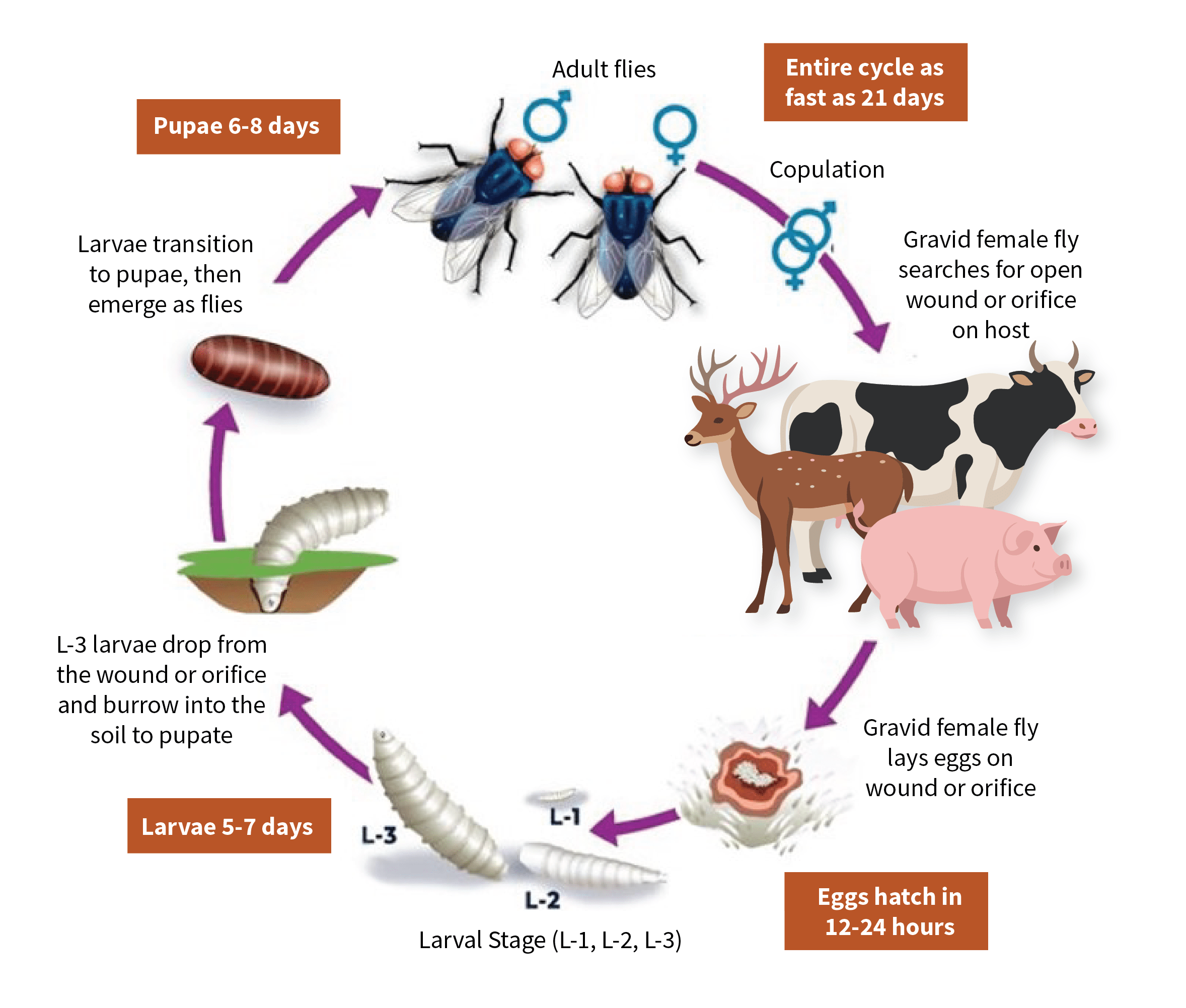
Life cycle of the New World Screwworm from USDA APHIS
The New World Screwworm was eradicated from the United States in 1966, but has recently been detected again in livestock and dogs in Texas and New Mexico. In Colorado we are likely to be at low risk, but prevention and/or treatment is recommended if you go to these areas with your dog. Current guidelines on prevention are similar to those for fleas and ticks, and to check and immediately treat any open wounds (as small as a tick bite). You can find more information in this article.
Nosework fun for you and your dog!
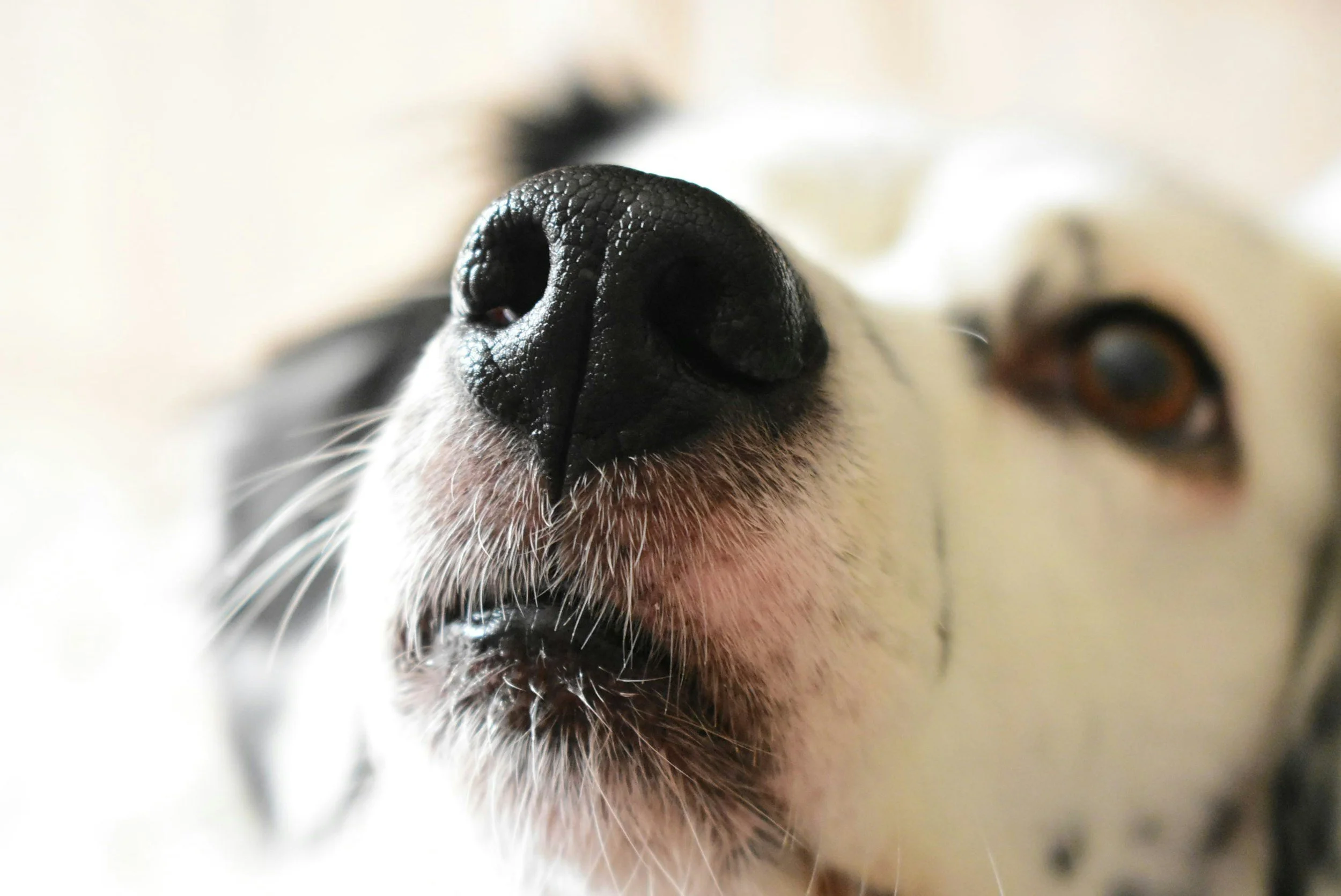
Every Tuesday night I teach odor detection classes at the Canine Learning Center. I also teach nose work classes for Human-Animal Bond in Colorado (HABIC).
At both locations I run classes to accommodate all levels: from dogs who have never done a search before to seasoned pros. All classes are a wonderful way to use your dog’s brain and create teamwork.
These classes are lively and fun for both you and your dog!