
Life lessons from animal training
In January I gave a presentation on “Dog Training for People” for the Professional Development Institute at Colorado State University. This presentation provides good information about how behavior works and the benefits of positive reinforcement training for all learners of every species.
It also always reminds me of key life lessons that I have taken from training animals:
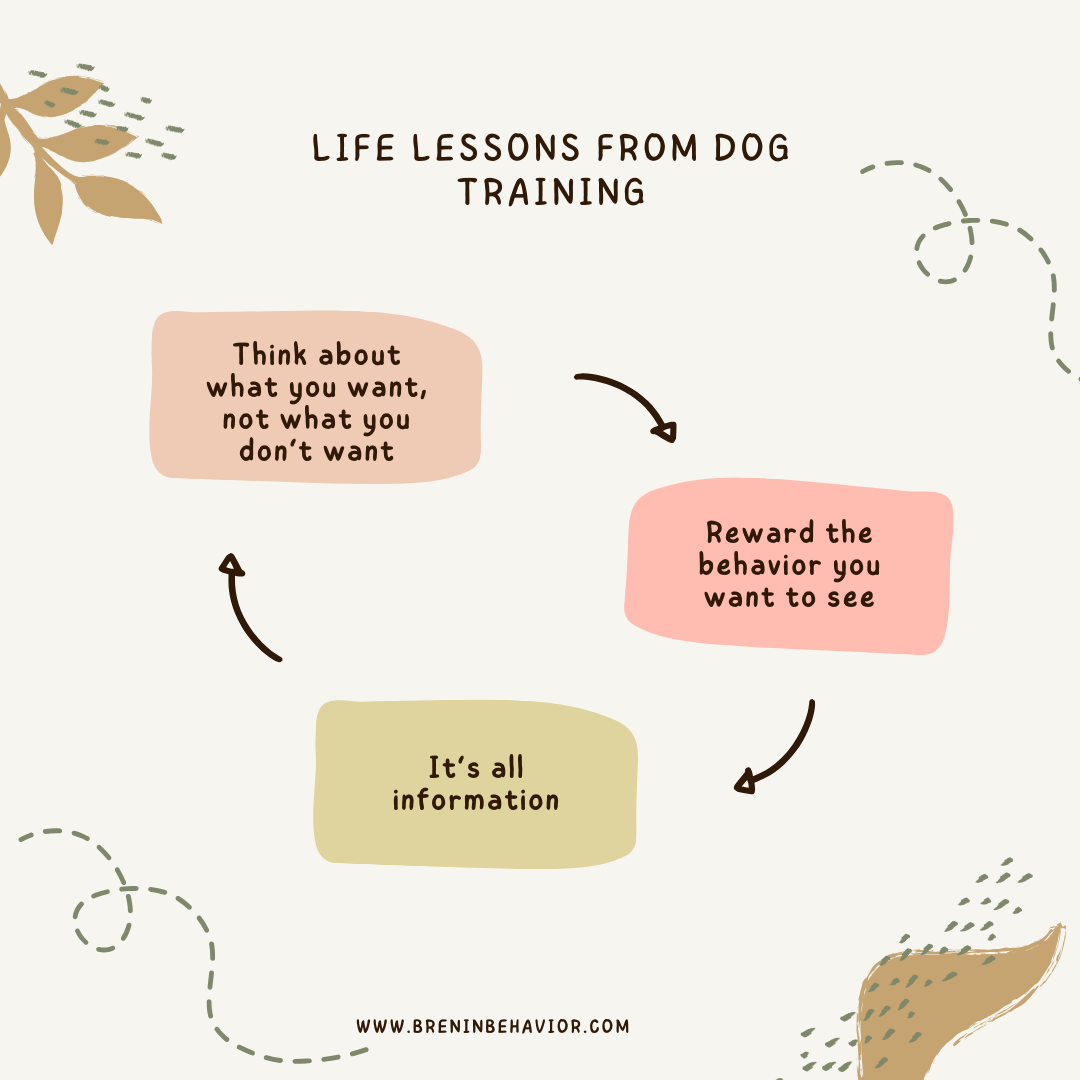
Think about what you want, not what you don’t want

If you leave stuff on the floor it may be used by a cat!
“The central lesson I learned from exotic animal trainers is that I should reward behavior I like and ignore behavior I don’t”
I really love this article by Amy Sutherland of the New York Times, who describes how she trained her husband using techniques she observed from trainers working with dolphins and tigers. She would get terribly frustrated by her husband leaving clothing on the floor, but found that if she ignored random socks but thanked her husband every time he put one in the hamper, magically the floor began to be more clear.
Behaviors that work are repeated (whether this is getting a treat for sitting if you are a dog, or getting a kiss for putting socks in the hamper if you are a husband).
Behaviors that don’t work are modified or suppressed (whether this is jumping up or using the hamper).
This is because the behavior that works is marked and reinforced, so becomes conditioned as habit.
This life lesson resonates with me because it is so easy to focus on what we don’t want in our life, or for our animals to do. This leads to a negative spiral. If your dog is doing something that you don’t want them to do (like jumping on visitors), teach them something that you do want them to do (like lying on a bed). Create a virtuous cycle instead! If something in life isn’t going as you want, what can you do to change that? Focusing on your goals will help them materialize.
2. Reward the behavior you want to see
Reinforcement is the process of strengthening behavior with consequences. If we make the consequence good, then we are likely to see more of that behavior. The learner always chooses what is reinforcing - in the video it was chocolate for Penny, for someone else it may be nuts or cheese. And reinforcers can take many forms besides food: a kind touch, a word of thanks, agency or choice, or ability to get away from something bad.
The key things to remember is that the reinforcer should be:
Contingent (depends on the behavior)
Contiguous (immediately follows the behavior)
Appropriate (big reinforcer for a big task, small reinforcer for a small task)
My training is based on positive reinforcement, where an animal is given food as a reinforcer after the behavior that I want to see. The power of this is that over time it becomes more than about the food - the learner begins to offer more.
Punishment is the opposite of this, where some kind of aversive stimulus is applied after a behavior (or even just told “no”). These methods do not teach the animal what to do instead, and don’t teach the handler how to teach. They can also withdraw trust and have side effects like aggression, fear, apathy, or avoidance.
I teach my clients to reward good choices that their learner makes. The more that you reward the decisions you want, the more of them you will see! This also pays wonderfully into your relationship bank account of trust.
This works with all learners, whether it is your animal, your husband, your children, or students!
3. It’s just information
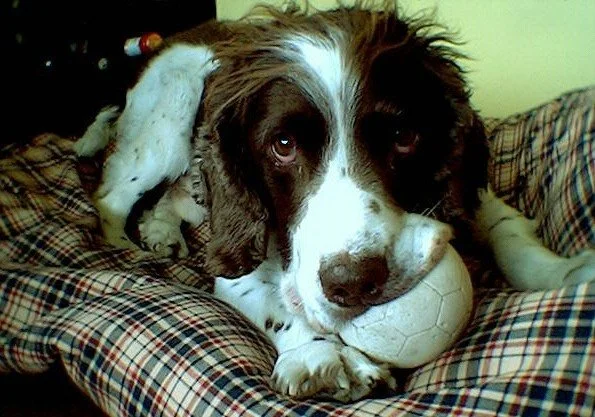
Brenin with a ball, instead of chasing ducks
“It’s just information” is perhaps the most valuable life lesson to me. As a scientist I have spent my career collecting data, which is just very specific information. Data are impartial, with no emotional valence attached. Yet when our animals do something it is very easy to immediately think that is very good or very bad. My dog Brenin would often chase ducks instead of coming when he was called. It is so easy to take these things personally!
When we take a step back and just view behavior as information without emotion we can assess with a clear mind how to proceed. What do I need to change to get a different outcome?
Which leads us back to the first life lesson - think about what you want, not what you don’t want.
Did you find these life lessons helpful? Let me know in the comments!
Nose work is a really fun activity to do with your dog! Working as a team with your dog builds your relationship and makes you an expert on reading your dog’s body language.

Do you want to teach your dog to find things?
Every Tuesday night I teach odor detection classes at the Canine Learning Center. I also teach a suite of nose work classes for Human-Animal Bond in Colorado (HABIC)!
At both locations I run classes to accommodate all levels: from dogs who have never done a search before to seasoned pros. All classes are a wonderful way to use your dog’s brain and boost your relationship.
Too busy to train your dog? Let me help!
I understand the frustration of needing to help your dog through behavior issues but never managing to find the time to train. This is why my Dog Tutoring service can be so helpful!
With Dog or Puppy Tutoring I come to your home and train your dog during the week while you are busy doing other things. So you come home to a happy, calmer, and better trained dog. At the weekend I show you what we have done and how you can maintain it.
This is perfect whether you are struggling with issues like pulling on the leash or excitement over visitors, and is terrific for puppies.
Dog Tutoring spots are limited, so book soon!